
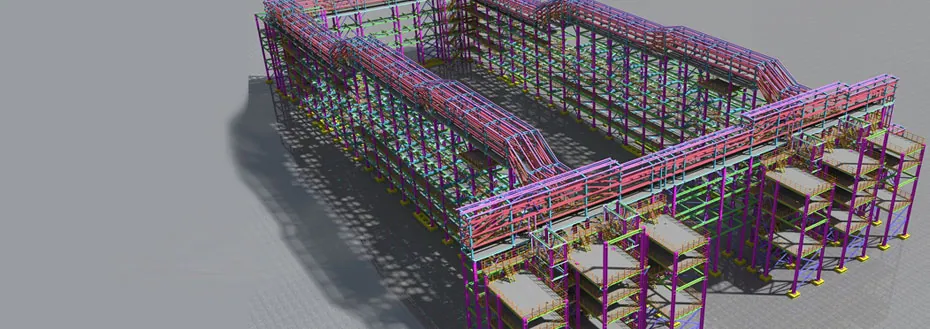
Welcome, Readers, to Silicon Valley's blog! Today, we delve into the world of Structural Steel Detailing and our dedication to delivering the best knowledge through our ongoing process.
Structural Steel Detailing Services is a crucial process in the field of structural engineering and construction. It involves creating detailed drawings, plans, and documents that provide the necessary information for fabricating and erecting steel structures. These structures can include buildings, bridges, towers, industrial plants, and other steel-based infrastructures.
The purpose of structural steel detailing is to translate the design created by structural engineers into precise instructions that steel fabricators and erectors can follow. This ensures that the steel components are accurately manufactured and assembled, leading to a safe and sturdy final structure.
Structural steel detailing plays a crucial role in the construction process, and its importance cannot be overstated. Here are some key reasons why structural steel detailing is essential in construction:
Accuracy and Precision: Detailed drawings and plans produced during steel detailing ensure that the steel components are fabricated to exact dimensions and specifications. This precision is vital for proper fitting and alignment during construction, minimizing errors and rework.
Safety and Structural Integrity: Steel structures must be safe and able to withstand the loads and forces they will experience. Proper detailing ensures that connections and joints are designed correctly, minimizing the risk of structural failure or collapse.
Cost Efficiency: Accurate detailing reduces material waste and labor costs. With precise instructions, steel fabricators can optimize material usage, leading to cost savings.
Compliance with Building Codes: Structural steel detailing ensures that the construction adheres to local and international building codes and regulations. Compliance is crucial for obtaining permits and ensuring the safety and quality of the structure.
Seamless Communication: Detailed drawings act as a common language between engineers, fabricators, and erectors. They help convey design intent and construction requirements effectively, reducing miscommunication and errors.
Clash Detection: During the detailing process, potential clashes with other building systems (e.g., electrical, mechanical) can be identified and resolved before construction begins, avoiding costly and time-consuming conflicts during the build phase.
Efficient Fabrication and Erection: Fabricators rely on detailed shop drawings to cut, bend, and assemble steel components accurately. Erectors use erection plans to assemble the structure efficiently and safely on-site.
3D Visualization: Advanced software allows for 3D modeling, enabling stakeholders to visualize the final structure before construction begins, identifying any design issues early in the process.
Project Coordination: Structural steel detailing helps in project management by providing clear timelines and sequencing for fabricators and erectors, leading to smoother construction workflows.
Flexibility in Design Changes: While changes during construction can be costly, detailed drawings facilitate easier adaptations if required, reducing the impact of design modifications.
Structural steel detailing has a significant impact on the success of a construction project in various ways. Its influence extends throughout the entire project lifecycle, from design to fabrication and construction. Here are some key ways in which structural steel detailing impacts project success:
Accuracy and Quality: Detailed and precise drawings produced during steel detailing ensure that the steel components are fabricated and erected accurately. This accuracy directly translates to the overall quality of the structure, reducing the likelihood of errors and rework, and ultimately leading to a safer and more durable final product.
Time and Cost Efficiency: Efficient detailing optimizes the use of materials and streamlines the fabrication and construction processes. This leads to reduced material waste, faster construction timelines, and cost savings, making the project more economically viable and competitive.
Safety and Compliance: Properly detailed connections and joints ensure that the steel structure can withstand the intended loads and forces. This enhances the safety and integrity of the building, reducing the risk of accidents or structural failures. Additionally, adherence to building codes and regulations through detailing ensures legal compliance and a smoother permitting process.
Improved Communication and Collaboration: Detailed drawings act as a common language between engineers, fabricators, and erectors. This enhances communication and collaboration among all project stakeholders, leading to better coordination and reduced chances of misinterpretation or conflicting instructions.
Clash Detection and Conflict Resolution: Structural steel detailing allows for the early identification and resolution of clashes with other building systems like electrical, mechanical, or Architectural Designs components. Addressing these issues before construction minimizes costly changes during the construction phase and improves project workflow.
Enhanced Visualization: Advanced 3D modeling capabilities in detailing software enable stakeholders to visualize the final structure before construction begins. This allows for better design review, early identification of potential design issues, and improved decision-making throughout the project.
Project Management and Planning: Detailed shop drawings and erection plans provide clear timelines, sequencing, and resource requirements for fabrication and construction activities. This facilitates effective project management and resource allocation, leading to smoother execution and timely completion.
Flexibility and Adaptability: In the event of design changes or modifications during construction, well-documented detailing facilitates easier adaptations. This ability to be flexible and responsive to changes minimizes project disruptions and keeps the construction process on track.
Quality Control and Documentation: Proper steel detailing ensures accurate documentation of the project, which aids in quality control and enables efficient maintenance and future modifications.
Structural steel detailing involves creating detailed drawings, plans, and documents to provide precise instructions for fabricating and erecting steel structures. The key components of structural steel detailing include:
Detailed Drawings: The core component of steel detailing is the preparation of detailed 2D drawings and 3D models that depict the exact dimensions, shapes, and positions of each steel member in the structure.
Connection Design: Designing connections between various steel members, such as beams, columns, braces, and trusses, is crucial for ensuring the stability and integrity of the structure. Detailers specify the type of connections and the materials required for each connection.
Material Specifications: Specify the grade and properties of the steel to be used in the project. This includes detailing the type and size of steel sections (e.g., HSS, W shapes) for each member, considering the Structural Engineering Services requirements and load-bearing capacity.
Bills of Materials (BOM): Preparing comprehensive lists of all the steel materials needed for the project, including quantities, sizes, and lengths, and identifying unique parts like bolts, nuts, and anchors.
Anchor Bolt Plans: Detailing the anchor bolts that secure the structure to its foundation. Anchor bolt plans specify the location, size, and embedment depth of each bolt.
Shop Drawings: Detailed drawings prepared for the fabrication shop, providing precise instructions for cutting, bending, and assembling steel members. These drawings help fabricators produce the individual parts required for construction.
Erection Plans: Plans and drawings for the on-site assembly of the steel components. Erection plans guide the construction crew on the sequence of assembly and the proper alignment of the steel members.
Field Bolting and Welding Details: Specify the locations and types of bolts and welds used in the field during construction. This includes the size and spacing of bolts, the number of welds, and their specifications.
Dimensional Tolerances: Defining allowable tolerances for steel member dimensions, ensuring that variations during fabrication and erection are within acceptable limits.
Clash Detection and Coordination: Identifying and resolving potential clashes or conflicts with other building systems (e.g., electrical, plumbing) to avoid issues during construction.
Code Compliance: Ensuring that the design and construction adhere to relevant building codes, industry standards, and regulatory requirements.
Revision Management: Managing revisions and updates to drawings throughout the project lifecycle, ensuring all stakeholders are working with the latest and most accurate information.
Structural Analysis Coordination: Coordinating with structural engineers to verify design calculations and ensure that the detailing aligns with the engineering requirements.
Documentation and Record Keeping: Properly documenting all detailing activities, including changes, approvals, and project progress, to maintain an organized record for future reference.
The combination of these key components ensures that the structural steel detailing process produces accurate, comprehensive, and consistent information, facilitating efficient fabrication, construction, and the overall success of the steel construction project.
Structural steel detailers play a crucial role in the construction industry, bridging the gap between structural engineers and steel fabricators/erectors. Their primary responsibility is to create detailed drawings, plans, and documents that provide precise instructions for fabricating and erecting steel structures. Here are the key roles and responsibilities of structural steel detailers:
Detailed Drawings Preparation: Detailers create comprehensive 2D drawings, 4D BIM Modeling Services and 3D models that depict the exact dimensions, shapes, and positions of each steel member in the structure. These drawings act as a blueprint for the construction process.
Connection Design: Detailers design the connections between different steel members, ensuring they can withstand the loads and forces acting on the structure. They specify the type of connections, the materials to be used, and the required welds or bolts.
Material Specifications: Detailers specify the type and size of steel sections (e.g., beams, columns, braces) for each member, taking into account the structural requirements and load-bearing capacity.
Bills of Materials (BOM) Preparation: Detailers prepare detailed lists of all the steel materials needed for the project, including quantities, sizes, and lengths, and identify unique parts like bolts, nuts, and anchors.
Shop Drawings Creation: Detailers produce shop drawings, which provide precise instructions for fabricators on cutting, bending, and assembling steel members. These drawings help fabricators produce the individual parts required for construction.
Erection Plans Development: Detailers create erection plans and drawings for the construction crew, guiding them on the sequence of assembly and the proper alignment of the steel members during on-site erection.
Field Bolting and Welding Details: Detailers specify the locations and types of bolts and welds used in the field during construction. This includes the size and spacing of bolts, the number of welds, and their specifications.
Clash Detection and Coordination: Detailers identify and resolve potential clashes or conflicts with other building systems (e.g., electrical, plumbing) to avoid issues during construction. They ensure that the steel components fit seamlessly with other elements of the structure.
Code Compliance: Detailers ensure that the design and construction adhere to relevant building codes, industry standards, and regulatory requirements.
Revision Management: Detailers manage revisions and updates to drawings throughout the project lifecycle, ensuring all stakeholders are working with the latest and accurate information.
Communication and Collaboration: Detailers work closely with structural engineers, steel fabricators, and construction teams, ensuring effective communication and collaboration throughout the project.
Quality Control: Detailers are responsible for ensuring the accuracy and quality of the detailed drawings and documentation, minimizing errors and discrepancies.
The process of structural steel detailing involves several sequential steps to create detailed drawings and documentation for fabricating and erecting steel structures. Here's a step-by-step overview of the typical structural steel detailing process:
Review Structural Design: The process begins with the detailer reviewing the Structural Design And Drafting, engineering drawings prepared by the structural engineer. Understanding the design intent, load requirements, and connection details is crucial for accurate detailing.
Initial Modeling: Using specialized computer-aided design (CAD) software, the detailer creates a 3D model of the entire steel structure. This model serves as the foundation for generating detailed drawings and plans.
Member Detailing: Detailers focus on individual steel members (beams, columns, braces, etc.) within the 3D model. They define the exact dimensions, shapes, and end-cuts of each member, considering the structural requirements and load-bearing capacity.
Connection Design: Detailers design the connections between different steel members. They choose the appropriate connection types (e.g., bolted, welded), specify the size and number of bolts or welds, and ensure the connections can withstand the applied loads.
Bills of Materials (BOM): Detailers compile a comprehensive list of all required steel materials, including member sizes, quantities, lengths, and any additional items like bolts, nuts, and anchors.
Shop Drawings: Using the 3D model and member detailing information, detailers create detailed 2D shop drawings for each steel member. These drawings provide fabrication instructions for steel fabricators, indicating cutting, bending, hole drilling, and other fabrication details.
Erection Plans: Detailers prepare erection plans and drawings for on-site construction. These plans guide the construction crew on the sequence of assembly, proper alignment, and erection methodology.
Anchor Bolt Plans: Detailers create plans detailing the anchor bolts used to secure the structure to its foundation. The plans include bolt locations, sizes, and embedment depths.
Clash Detection: Detailers use 3D modeling software to detect and resolve clashes or conflicts with other building systems (e.g., mechanical, electrical) to ensure smooth construction.
Code Compliance: Throughout the process, detailers ensure that all detailing adheres to relevant building codes, industry standards, and regulatory requirements.
Review and Approval: The detailed drawings, shop drawings, and plans are reviewed by various stakeholders, including structural engineers, fabricators, and construction teams, for accuracy and compliance. Any necessary revisions are made before final approval.
Documentation and Delivery: Once approved, the final detailed drawings, shop drawings, and plans are compiled, documented, and delivered to the fabricators and construction teams for use during fabrication and construction.
Project Updates: Detailers may need to update and revise drawings as the project progresses or if there are design changes during construction. Effective revision management is essential to ensure all stakeholders are working with the latest information.
Structural steel detailing offers numerous benefits to the construction industry, project stakeholders, and the overall success of steel-based structures. Some of the key benefits of structural steel detailing include:
Accuracy and Precision: Detailed drawings and 3D models produced during steel detailing ensure precise fabrication and construction. This accuracy minimizes errors, rework, and discrepancies during the construction process.
Cost Efficiency: Efficient detailing leads to optimized material usage, reducing waste and material costs. The accurate fabrication instructions in shop drawings also streamline the manufacturing process, saving time and resources.
Safety and Structural Integrity: Properly detailed connections and joints enhance the safety and integrity of the structure, ensuring it can withstand the intended loads and forces.
Code Compliance: Structural steel detailing ensures that the design and construction adhere to building codes and industry standards, preventing potential legal and regulatory issues.
Improved Communication and Collaboration: Detailed drawings act as a common language between engineers, fabricators, and construction teams. Effective communication and collaboration lead to better coordination and minimize misunderstandings.
Clash Detection and Conflict Resolution: Detailing allows for the early identification and resolution of clashes with other building systems, reducing costly changes during construction.
Enhanced Visualization: 3D modeling capabilities enable stakeholders to visualize the final structure before construction begins, leading to better design review and decision-making.
Time Savings: Detailed fabrication instructions and erection plans expedite the construction process, leading to faster project completion.
Flexibility in Design Changes: Detailed documentation facilitates easier adaptations in case of design modifications, minimizing disruptions and keeping the construction process on track.
Quality Control: Proper steel detailing ensures that the end product meets the required quality standards, leading to a structurally sound and aesthetically pleasing final structure.
Accurate Bills of Materials (BOM): Detailed BOMs help in efficient procurement, ensuring that the required materials are available when needed, reducing construction delays.
Smoother Project Management: Detailed drawings and plans provide clear timelines and sequencing for fabrication and construction activities, making project management more efficient.
Documentation and Record Keeping: Properly documented detailing activities create a comprehensive record that aids in quality control and provides valuable references for future maintenance and modifications.
Long-Term Durability: Steel structures detailed accurately are more likely to have longer lifespans and require less maintenance over time.
Structural steel detailing relies on various tools and software to facilitate the creation of detailed drawings and documentation. Some of the key tools and software used in the process include:
Computer-Aided Design (CAD) Software: CAD software is the foundation of structural steel detailing. It allows detailers to create 2D and 3D representations of steel structures and enables precise modeling and dimensioning of individual members.
Building Information Modeling (BIM) Software: BIM software goes beyond traditional CAD by integrating data and information from various disciplines, including architectural, structural, and MEP (mechanical, electrical, plumbing). It improves collaboration and clash detection among different building systems.
Tekla Structures: Tekla Structures is a popular BIM software specifically designed for structural steel detailing. It offers powerful tools for 3D modeling, connection design, and generating fabrication drawings and reports.
Autodesk Advance Steel: Advance Steel is a comprehensive 3D modeling software tailored for structural steel detailing. It includes features for connections, BOM generation, and the creation of fabrication drawings.
Revit: Autodesk Revit is another widely used BIM software that allows structural engineers and detailers to collaborate seamlessly on projects. It integrates steel detailing with other building components, facilitating better coordination.
CADS RC: CADS RC is a specialized software for reinforced concrete detailing, often used in conjunction with structural steel detailing to coordinate steel and concrete elements.
Navisworks: Navisworks is a project review software that enables visualization, 3D model coordination, clash detection, and collaboration among project stakeholders.
Bluebeam Revu: Bluebeam Revu is a PDF-based collaboration software that facilitates reviewing, marking up, and sharing structural steel drawings among team members.
Microsoft Excel: While not dedicated detailing software, Excel is commonly used for generating and managing Bills of Materials (BOMs) and other project documentation.
3D Scanning Equipment: Laser scanners for Scan To BIM Services and 3D measurement devices are used to capture as-built conditions accurately, aiding in retrofitting and renovation projects.
3D Printing Technology: In some cases, 3D printing is used to create physical models of complex steel connections or components for visualization and design verification.
Structural steel detailing is a complex process that involves various challenges and potential pitfalls. Some of the common challenges and pitfalls include:
Coordination Issues: Lack of coordination between architectural, structural, and MEP disciplines can lead to clashes and conflicts during construction, requiring costly revisions and delays.
Design Changes: Design changes can occur during the detailing phase, leading to rework and extra effort to update the drawings and documentation.
Inaccurate Measurements: Incorrect or inaccurate measurements during site surveys or data input can result in errors in the detailing process, leading to fabrication and construction issues.
Complex Geometry: Designing and detailing structures with complex geometry, irregular shapes, or non-standard connections can be challenging and may require specialized expertise.
Tight Schedules: Time constraints and tight project schedules can put pressure on detailers, potentially leading to overlooked details and errors.
To achieve successful structural steel detailing, adhering to best practices is crucial. Here are some key best practices that can contribute to the success of the detailing process:
Thoroughly Review Design Documents: Begin by carefully reviewing the structural design and engineering drawings to understand the design intent, load requirements, and connection details. Clarify any ambiguities or missing information with the structural engineer before proceeding.
Utilize Advanced Software: Employ powerful and specialized structural detailing software, such as Tekla Structures or Autodesk Advance Steel, to improve accuracy, efficiency, and coordination among project stakeholders.
Maintain Effective Communication: Foster open and regular communication between structural engineers, detailers, fabricators, and construction teams. This ensures that everyone is on the same page and any issues can be addressed promptly.
Emphasize Collaboration: Encourage collaboration among various disciplines, including architectural, structural, and MEP, to prevent clashes and conflicts during construction.
Conduct Site Surveys and Verification: Perform thorough site surveys to verify existing conditions before starting the detailing process. Accurate as-built data is crucial for retrofitting or renovation projects.
As technology continues to advance and the construction industry evolves, several future trends are likely to impact structural steel detailing:
Building Information Modeling (BIM) Integration: BIM will play an increasingly significant role in structural steel detailing. BIM allows seamless integration of BIM Virtual Design and Construction for various building disciplines, enabling better collaboration, clash detection, and improved coordination among stakeholders.
Cloud-Based Collaboration: Cloud-based software and platforms will facilitate real-time collaboration and data sharing among different project teams, regardless of their physical locations. This will enhance communication and streamline project management.
AI-Assisted Detailing: Artificial Intelligence (AI) technologies may be incorporated into detailing software to automate certain repetitive tasks, enhance clash detection, optimize connection design, and improve overall efficiency.
Generative Design: Generative design techniques will enable the automatic generation of multiple design alternatives, allowing detailers to explore innovative and optimized solutions.
Advanced 3D Visualization: Enhanced 3D visualization capabilities will enable stakeholders to experience virtual walk-throughs of the steel structures, providing a more immersive and interactive design review process.
Prefabrication and Modular Construction: As prefabrication and modular construction gain popularity, detailers will need to adapt their processes to accommodate the manufacturing and assembly of pre-built components.
Drones and 3D Scanning: Drones equipped with 3D scanning technology will aid in the accurate surveying of existing structures and construction sites, providing data for as-built conditions and assisting in renovation projects.
Robotics and Automation in Fabrication: Automation and robotics will further streamline fabrication processes, optimizing material usage, reducing labor costs, and improving production speed.
Sustainable Design and Analysis: Detailers will focus more on sustainable design practices, considering factors like material efficiency, recyclability, and energy conservation in steel structures.
Integration of IoT and Smart Sensors: Internet of Things (IoT) devices and smart sensors integrated into steel structures will enable real-time monitoring, maintenance alerts, and performance analysis.
Dear Valued Readers,
We are deeply grateful for your support and engagement on our blog about Structural Steel Detailing. Your passion for this subject inspires us, and together, we will continue shaping the future of this exciting field.
With heartfelt thanks,
Silicon Valley Infomedia Pvt. Ltd.